ADA Certified Accessible Portable Bathrooms: Browsing Rental Compliance
@kylercevo368
Renting portable toilets seems basic till accessibility goes into the discussion, and it needs to enter the conversation every single time. For event coordinators, home supervisors, municipalities, and anyone arranging short-lived hygiene, the question is not just whether a restroom will get here on time and obtain serviced effectively. The question is whether people with impairments can actually use it with dignity, safety, and independence.
That is where numerous or else cautious rental strategies fall apart. Somebody publications a financial institution of basic devices for a festival, a college fundraising event, a street reasonable, or a short-lived public project, after that thinks the largest device in the schedule counts as certified. Or they remember to purchase one ada mobile toilet, however position it on soft ground, behind a curb, or at the end of a slim course that makes the unit successfully pointless. Theoretically, they tried. In practice, access failed.
The federal structure that matters below is the 2010 ADA Specifications for Accessible Style, together with relevant interpretation from the united state Gain Access To Board and the Department of Justice. Those criteria shape what counts as obtainable in the United States, including for mobile bathroom leasings in lots of public-facing settings. If you are organizing ada certified accessible portable washrooms, the best attitude is to believe beyond the device itself. Compliance is not a sticker label on a door. It is the system, the course to it, the means it is determined, and the way it functions for the people who need it.
Where rental compliance usually gets misunderstood
A lot of confusion begins with the expression itself. Individuals make use of terms like ada certified portable bathroom, ada-compliant portable commode, wheelchair system, handicap portable, and oversized toilet as if they all indicate the same point. They do not. A spacious mobile toilet is not automatically an obtainable one. An ada handicap obtainable mobile toilet has to meet accessibility requirements, not just supply added indoor space.
Another point of complication is the count. When portable single-user bathroom devices are organized together in a collection, at least 5 percent of the devices because cluster must be accessible. The Access Board has actually explained that this expectation uses also at short-term occasions. That issues due to the fact that many tenants think temporary ways excluded. It does not, at the very least not in the way individuals often hope.
The phrase "a minimum of 5 percent" sounds straightforward, however in the field it has a tendency to increase immediate preparation questions. If you are buying a small collection, you do not round your obligation down to absolutely no in spirit. You prepare very early and ask the rental provider direct inquiries concerning how they manage ease of access scoping. The earlier this takes place, the less complicated it is to position the systems correctly and prevent a late scramble.
There is also a slim however important difference entailing construction websites. The older 1991 criterion acknowledged an exemption for mobile bathroom systems at building and construction sites when those systems are utilized exclusively by building workers. That restricted factor gets repeated out of context regularly. It does not clean away availability responsibilities for basic mobile toilet services serving the general public, event guests, customers, lessees, or combined individuals. If the rental offers a broader target market, you should not rely on that construction-only idea as cover.
The portable restroom is just part of the compliance picture
One of the most common errors I see in ease of access planning is treating the system as the entire answer. It is not. You can rent a legit ada certified portable bathroom and still produce an unattainable restroom area with poor placement.
The unit have to get on an available course. The entry needs to be accessible. If ramps or touchdowns are needed, those attributes additionally need to follow the suitable ADA technological demands. That indicates a provider can not just go down an easily accessible system in a location that calls for customers to go across mud, navigate deep gravel, press through barriers, or technique from a steep improvised plywood ramp and call it good.
This is where rental compliance comes to be practical as opposed to theoretical. The concerns you ask before shipment typically matter more than the label published in the sales order. Where specifically will the device rest? How will somebody reach it from parking, walkways, collecting areas, or the event entryway? Will the surface area keep secure if it rains? Is there enough clear technique room when fence, generators, dumpsters, or group control barriers go in?
These information matter due to the fact that availability requirements do not quit at the limit. An accessible mobile toilet that can only be reached by an inaccessible path does not resolve the issue. It advertises inclusion while supplying exemption, which is frequently even worse than a noticeable oversight since it tells customers their demands were thought about when they were not.
What makes a portable system accessible
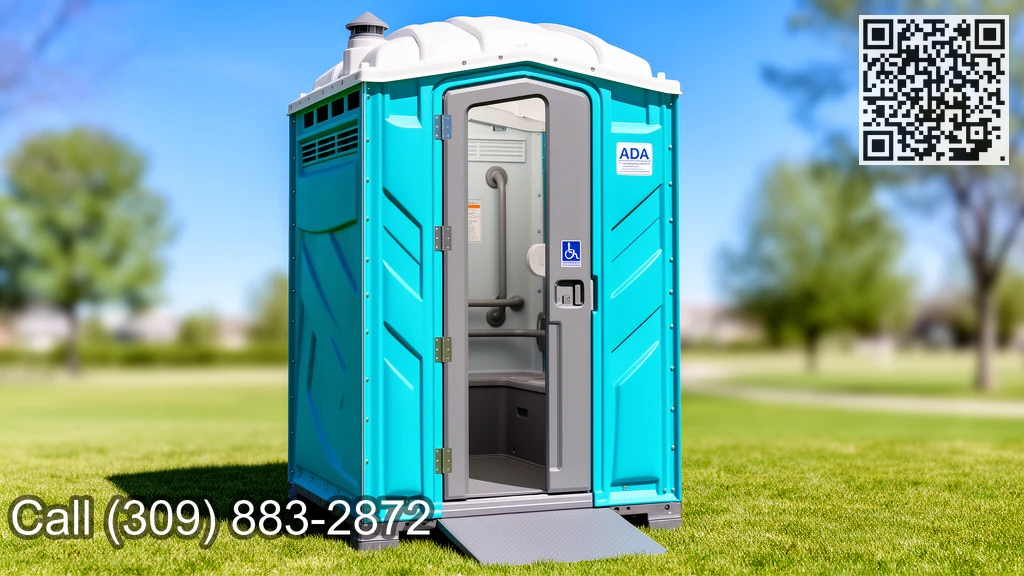
The technological needs for easily accessible commode rooms still apply to portable units. The device needs to suit required clearances, transforming area, and door maneuvering clearances. It likewise has to follow relevant rules for grab bars and water storage room clearances. The functional takeaway is basic: if a vendor can not clarify exactly how their easily accessible device is made to meet those practical demands, you should keep asking questions.
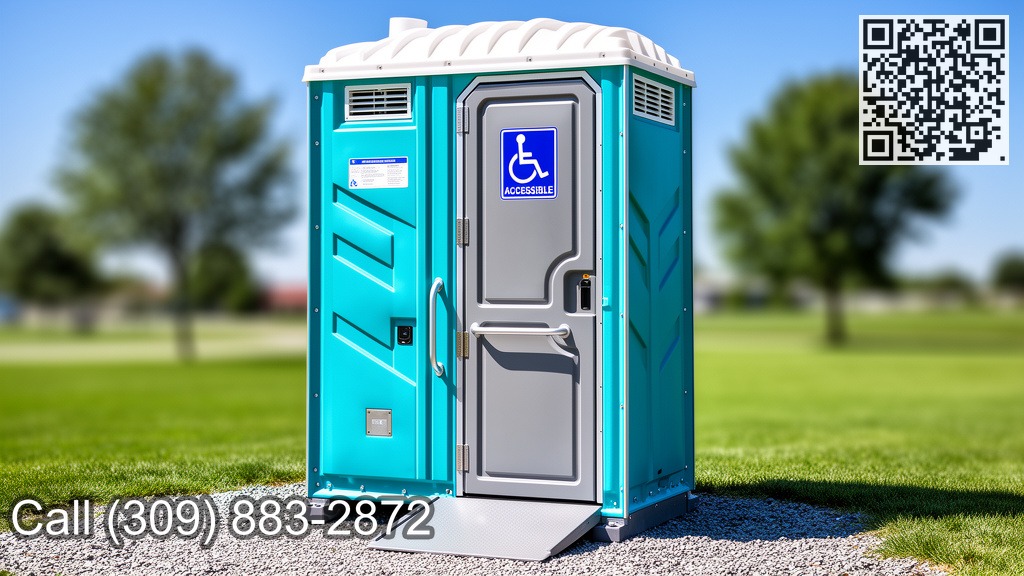
The various other visible requirement is recognition. Available portable commode systems need to be marked with the International Icon of Accessibility. That symbol is not decorative. It assists users situate the correct device without uncertainty, and it indicates that the device is planned to satisfy ease of access requirements instead of merely provide additional room.
I have actually seen planners concentrate greatly on visual appeals, especially at weddings, upscale outdoor occasions, and branded activations. They stress that ease of access markings or a larger device will watch out of location. That reaction is easy to understand, but it is the wrong top priority. If appearance worries begin driving toilet placement or option, gain access to usually experiences first. People discover when a restroom area is inconvenient. They bear in mind when it is unusable.
Temporary event does not imply temporary obligation
Some of the hardest conversations happen with coordinators planning short-duration events. They may only need bathrooms for eventually, one weekend break, or one night, so they think the compliance problem should be lighter. However the expectation for accessible systems in mobile single-user clusters still uses at momentary events.
That point is worth sitting with for a minute. A music event that lasts eight hours, a church picnic, an area ceremony staging area, or a midtown vendor market may all really feel casual compared to an irreversible structure. From the user's perspective, though, the need is prompt and really real. If someone attends your occasion and can not utilize the washroom since the only easily accessible alternative is missing or inadequately positioned, the short-lived nature of the event does not soften the impact.
Short events additionally have a way of amplifying errors. Permanent sites in some cases have backup choices nearby. Short-lived sites frequently do not. If the ada accessible mobile bathroom is blocked by catering tools, parked as well close to a fence, or set on a course that ends up being blockaded after rain, there might be no reasonable alternative.
The best questions to ask before you sign the rental order
Most conformity issues appear before distribution, also if they are not identified until much later on. A short preparation conversation can stop a great deal of pricey repairs and unpleasant apologies.
Here are the questions I would ask any portable washroom supplier or site team:
- How many devices remain in the collection, and how many of those are accessible?
- Is the accessible system plainly identified with the International Icon of Accessibility?
- What site conditions are required for an easily accessible path and entry to function properly?
- If the positioning needs ramps or landings, that is responsible for ensuring those aspects fulfill ADA requirements?
- Can the system be positioned so door navigating area and strategy are not obstructed by various other equipment or fencing?
That listing is short intentionally. You do not need a lawful workshop to identify danger. You require enough clearness to know whether the provider recognizes access as an actual functional demand, not an optional add-on.
Why website design can silently weaken an or else compliant rental
A rental agreement may appropriately include ada compliant portable toilets, yet the last configuration can still stop working individuals because the site developed after the order was placed. This occurs more often than people admit. An event map obtains revised. A food truck row broadens. Protection secure fencing changes. An enroller tent declares the flatter section of pavement. After that the washroom financial institution gets pushed right into the leftover space.
The remaining area is usually the worst feasible room for accessibility.
I bear in mind a temporary arrangement where the easily accessible system itself was fine, but it had actually been placed near a mild quality to keep the major walkway looking tidy. Theoretically, the format looked effective. Face to face, the path narrowed at an edge where stanchions had been included after the reality, and the landing area in front of the door came to be crowded with hand-sanitizer stands and trash bins. No one intended to create a barrier. They simply maintained making little choices that dealt with the available bathroom area as versatile space. By opening time, access had been jeopardized by a dozen minor changes.
That is why I always encourage organizers to safeguard the washroom footprint early. As soon as the available system area is selected, protect the route and the maneuvering area around it as strongly as you would shield a fire escape or a fire lane. Ease of access is not what stays after everybody else obtains their favored placement.
Compliance is broader than one policy cycle
It is also beneficial to understand the bigger climate around ADA responsibilities. Accessibility enforcement is not reducing. If anything, the broader conformity atmosphere has become much more active throughout sectors. One recent instance entailed Department of Justice guidance expanding a target date for state and city government internet and mobile accessibility guidelines into 2027 for larger entities. That growth was not about portable restrooms, however it showed something vital: ADA compliance continues to be a live concern, and companies must not expect access responsibilities to fade into the background.
Why does that matter for an ada mobile toilet leasing? Since it shapes just how companies ought to assume. Availability needs to not be treated as a low-visibility detail that just matters if somebody grumbles. It belongs in routine planning, procurement, public interaction, and site procedures. Portable hygiene is simply one piece of that bigger posture.
The language vendors utilize, and what renters should listen for
The toilet rental sector uses acquainted shorthand, and a few of it works. Terms like ada mobile commode or ada mobile washroom can assist identify the kind of system you require promptly. At the very same time, shorthand can hide spaces if no one asks exactly what is being promised.
If a vendor claims they have ada compliant mobile bathrooms offered, ask what they imply by compliant. Ask whether the system is meant to satisfy available toilet-room demands, whether it is understood the availability symbol, and what conditions need to exist on website for the configuration to remain available. A great vendor ought to not be annoyed by those questions. They need to await them.
This is particularly vital when multiple events are entailed. An event planner might buy the devices, a location might accept placement, a site specialist might prep the ground, and a different operations group may reorganize close-by devices the morning of the occasion. In those scenarios, ease of access can fail the fractures since everybody thinks somebody else is dealing with it.
I have actually found that one sentence can puncture the uncertainty: "We need this configuration to remain available from arrival through use, not just at shipment." That language tends to move the discussion from sales terminology to real-world function.
When counting devices obtains tricky
The 5 percent guideline for clusters seems cool, however short-lived sites are rarely cool. An usual grey location entails numerous toilet groupings spread throughout a residential property. One cluster might be near the major stage, one more by the entry, and an additional behind a vendor location. If they function as separate collections, you must believe thoroughly regarding access at each location as opposed to presuming one obtainable unit somewhere on the residential or commercial property addresses every issue.
I am being careful here due to the fact that the facts gave support the 5 percent guideline for every cluster, and that is the trustworthy anchor. The practical lesson is to prevent a minimalist analysis. A solitary easily accessible device positioned far away from where people actually need one may satisfy a person's paperwork impulse while failing the spirit and likely the operation of accessibility. Where users go matters. Distance issues. Route high quality matters.
This is additionally where empathy develops judgment. An individual making use of a wheelchair device ought to not need to leave one task location, travel much farther than everybody else, and browse a complicated course just to reach the only usable restroom. If your configuration creates that experience, something regarding the preparation most likely needs another look.
Construction sites should have careful distinction
Because portable commodes are so usual on task websites, individuals often duplicate partial details concerning construction exceptions. The vital difference is slim: mobile commode systems at building and construction sites used exclusively by building and construction workers were discriminated under the cited 1991 conventional scoping rule. That does not develop a covering exception for every mobile commode positioned near construction task, and it does not remove responsibilities for public-facing momentary bathroom rentals.
This matters on mixed-use websites, phased growths, streetscape tasks, and public improvements where building and construction activity overlaps with public gain access to. If mobile systems are serving visitors, customers, citizens, or event attendees, you should not casually classify them under a construction-only exemption and proceed. The user population matters.
When doubtful, caution is usually more affordable than correction. Ordering and effectively putting an ada compliant portable bathroom from the beginning is much easier than safeguarding a thin reading of an exemption after a complaint.
A few indications that a rental plan needs another pass
Accessibility issues often expose themselves through average preparation language. If a person states, "We'll tuck the easily accessible unit out of the way," I worry. If the preferred website is described as "close sufficient" despite gravel, quality adjustment, or blockage, I stress. If the plan depends on an improvised ramp without clear responsibility for conformity, I worry.
The patterns are familiar:
- the available device is ordered late, after the primary layout is currently fixed
- the route is thought as opposed to strolled and tested
- nearby items are enabled to intrude on the entrance or handling area
- signage and identification are dealt with as optional details
- the team perplexes a bigger unit with a certified one
None of these problems are unusual, and none call for negative intent. They normally come from haste, fragmented duty, or the assumption that temporary centers can be managed casually. That is why availability planning functions best when someone has the concern from beginning to finish.
What thoughtful conformity looks like in practice
Good rental conformity has a tendency to look typical, which is exactly the factor. The accessible device is present in the right percentage within the cluster. It is noted with the International Symbol of Ease Of Access. The course to it is useful. The entry works. If ramps or touchdowns are required, they satisfy the relevant demands. The space around the system has not been squeezed by barriers, decoration, or energy tools. Individuals that require the device can discover it and utilize it without needing to request unique help.
That kind of configuration does not occur by crash. It originates from teams that recognize a standard truth: access is operational. It lives in choices about procurement, placement, timing, guidance, and last-minute changes.
There is likewise a human side to this that commonly obtains lost in compliance talk. For numerous customers, washroom gain access to determines whether they can remain, get involved, function, appreciate an occasion, or feel welcome at all. If the only suitable bathroom is missing out on or unusable, individuals might have to leave early, limitation fluid intake, rely on buddies, or sustain humiliation that others never see. An empathetic technique to ada compliant obtainable mobile washrooms starts there, with the lived fact behind the rule.
When you view the leasing via that lens, the questions come to be more clear. Not "Did we purchase one?" however "Can somebody use it separately?" https://felixiwst198.halcyonledger.com/posts/the-amount-of-ada-certified-portable-restrooms-are-required-in-a-rental-cluster Not "Will this satisfy the list?" but "Would certainly I be comfortable protecting this setup to the person that depends on it?"
That is the level of treatment rental conformity should have. The criteria develop the floor. Thoughtful planning is what transforms that floor right into meaningful access.
 Ask ChatGPT
 Ask Grok
 Ask Perplexity
 Ask Claude
 Ask Google AI
 Ask You